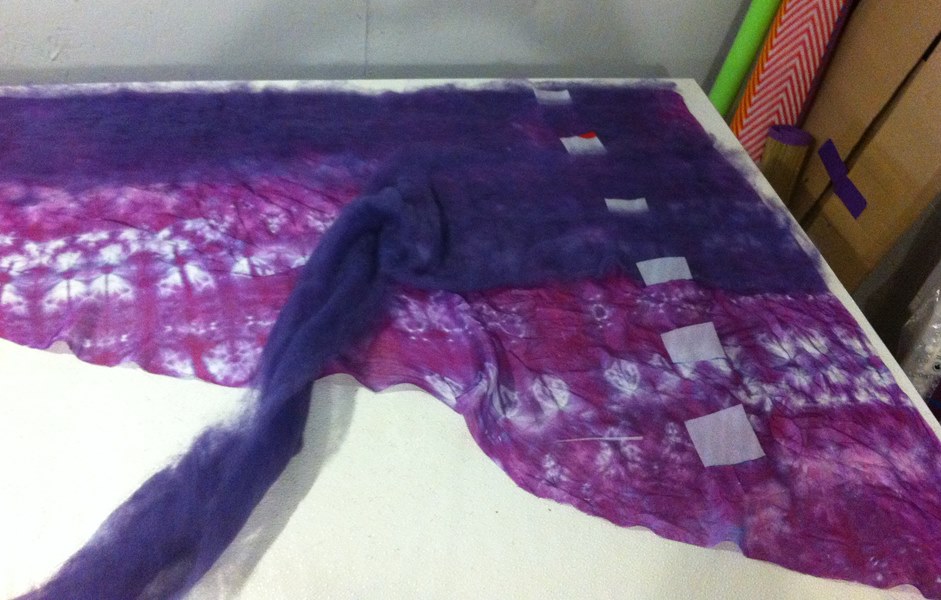
Nuno felting is the combination of a base fabric with fibers as they felt through and become permanently attached to this fabric. You can't have one without the other and end up with nuno felt.
COLOR: Felting on fabric allows you to play with color and color effects using the fabric alone, the fibers (and embellishments) alone or the combination of the two.
Because felting occurs as the fibers, through agitation, lock onto each other and shrink (40% to 50%), this also has a profound effect on the final color.
Add the base fabric, which does not shrink but puckers and folds along with the shrinking fibers, you end up with a kind of "double color effect" that only occurs with nuno felting. Each one has an effect on the other.
You have countless opportunities that you just do no have in other fiberart techniques to make the final colors results "sing" with variations and depth of color that are so fascinating and in the end make nuno felted fabrics so appealing.
You can use solid colors or handpainted, spiral colored fibers or combinations of wools with other non-felting fibers (silk, bamboo, flax, etc) to play your colors up or down, add depth and texture......the possibilities are endless.
These 2 nuno felted scarves are a quick example of "color play" based on the colors in the handpainted merino roving paired with silk gauze in 2 different colors: Tangerine silk base fabric on the left and Lime Green silk base fabric on the right. Same roving!

The "color effect" is obvious. Oranges and yellows pop on the left, the lime greens and yellows pop pn the right.
NEXT: The easiest way to get a strong COLOR EFFECT or COLOR POP.